
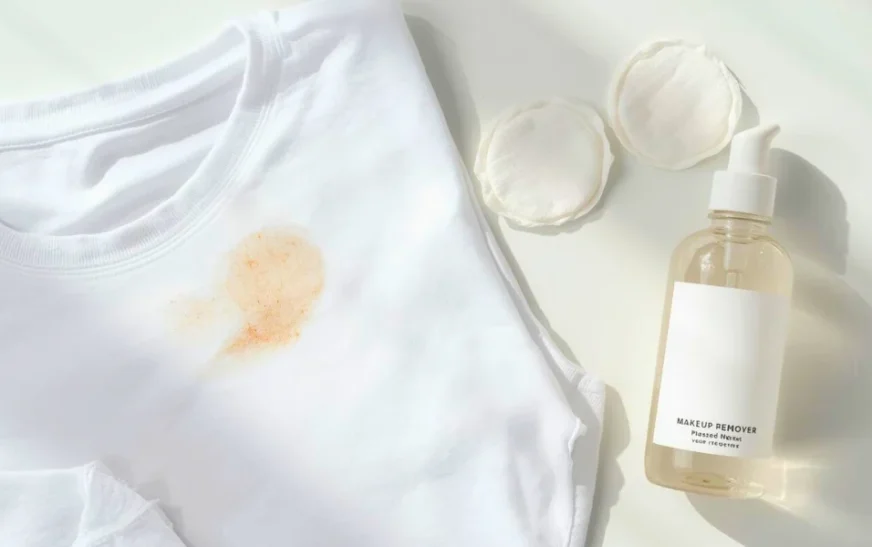
Makeup removal is an essential part of many skincare routines, especially after wearing foundation, mascara, sunscreen, or other cosmetics throughout the day. However, during this process, it’s common for makeup remover to accidentally drip onto clothing, sleeves, or pillowcases.
It leads many people to wonder whether these products can actually damage fabric or leave stains behind. Understanding how makeup remover interacts with different fabrics and how to handle stains properly can help protect both your clothes and your skincare routine.
Does Makeup Remover Stain Clothes?
Yes, makeup remover can stain clothes, particularly oil-based formulas like cleansing oils and balms. These products contain cosmetic oils, emollients, and sometimes pigment residue from makeup.
When they come into contact with fabric, they may create oily marks or discolouration. Fortunately, most makeup remover stains can be removed with simple household cleaning methods if treated quickly.
Why Makeup Remover Can Leave Stains on Fabric
Makeup removers are designed to dissolve stubborn cosmetics such as waterproof mascara, foundation, and sunscreen. To do this, they contain ingredients that break down oils and pigments. However, these same ingredients can transfer to clothing, which sometimes happens during beginner makeup mistakes, such as using too much remover or wiping makeup onto clothing.
Common stain-causing components include:
- Cosmetic oils like mineral oil or coconut oil
- Surfactants that lift makeup particles
- Emollients are used to soften skin
- Pigment residue from foundation or lipstick
When these substances come into contact with fabric, they may leave oily stains or discolouration, especially on absorbent materials.
Another factor is the fabric absorption rate. Some textiles soak up oil quickly, making stains harder to remove.
Which Types of Makeup Removers Stain the Most?
Different types of makeup removers affect clothing in different ways. Some formulas contain heavy oils, while others are mostly water-based. Products with higher oil content tend to leave stains more easily.
| Makeup Remover Type | Stain Risk | Why It Happens |
| Cleansing Oil | High | Rich in cosmetic oils that soak into fabric |
| Cleansing Balm | High | Melts into oily liquid during use |
| Makeup Wipes | Moderate | May transfer cleansing solution and pigment residue |
| Micellar Water | Low | Mostly water with gentle surfactants |
| Oil-Free Remover | Very Low | Minimal oil content reduces staining |
Oil-based removers are highly effective for waterproof makeup, but they also have the highest risk of leaving greasy marks on clothing. Micellar water is generally safer because it uses tiny cleansing molecules called micelles that lift makeup without heavy oils.
Fabrics Most Likely to Get Makeup Remover Stains
Not all fabrics react the same way to cosmetic oils. Some textiles absorb liquids quickly, increasing the risk of visible stains.
Cotton is one of the most absorbent materials, which means oil from cleansing products can easily spread through the fibres. Polyester absorbs less oil but may still hold greasy residue if the stain is not treated promptly.
Delicate fabrics such as silk or wool require extra care. Oil stains can damage these materials if they remain untreated for long periods. Thick fabrics like denim tend to resist stains better because their fibres are denser and less absorbent.
How to Remove Makeup Remover Stains
If makeup remover spills on clothes, act quickly. Fresh stains are much easier to remove.
Step-by-Step Stain Removal
Blot the stain. Use a clean cloth or paper towel to absorb excess oil.
Apply dish soap
Dish soap works as a degreaser and breaks down cosmetic oils.
Gently rub the fabric
Work the soap into the stain with your fingers.
Rinse with warm water
Rinse from the back of the stain to push residue out of the fibres.
Wash with laundry detergent
Use your regular detergent or an enzyme-based detergent for best results.
Check the stain before putting the clothing in the dryer. Heat can permanently set stains in the fabric.
Quick Household Fixes for Cosmetic Oil Stains
Sometimes you cannot wash clothes immediately after a spill. In those situations, a few simple household solutions may help temporarily absorb the oil.
Powders such as baking soda, cornstarch, or baby powder can draw oil out of fabric. Sprinkling a small amount over the stain and letting it sit for about ten to fifteen minutes allows the powder to absorb some of the grease.
Blotting the area with paper towels can also help remove excess product before it spreads further. These quick fixes are useful when you are away from home or unable to wash the clothing right away.
How to Prevent Makeup Remover from Staining Clothes
Prevention is easier than stain removal.
Simple habits can reduce the risk of cosmetic stains.
Practical Prevention Tips
- Remove makeup before changing into sleepwear
- Use a face towel or cleansing cloth
- Avoid touching clothing while removing makeup
- Keep cotton pads or wipes nearby
- Wash pillowcases regularly if removing makeup near bed
Some people also wear an old T-shirt during their skincare routine to avoid staining their favourite clothing.
When Professional Cleaning May Help
Most stains can be removed at home. However, stubborn oil stains on delicate fabrics sometimes require professional treatment.
Situations where dry cleaning services may help:
- Silk or wool garments
- Expensive clothing
- Stains that remain after washing
Professional cleaners use specialised solvents designed for cosmetic oils.
Why Oils Stain Fabric So Easily
Oil molecules naturally cling to textile fibres. When cosmetic oils enter the tiny gaps between threads, they attach to the fibres and resist simple water rinsing.
That is why soap or detergent is necessary. These cleaning agents contain surfactants that break the bond between oil and fabric, allowing the stain to wash away.
Choosing Makeup Removers That Are Less Likely to Stain
If clothing stains happen frequently, switching to a lighter makeup remover formula may help. Products such as micellar water, foaming cleansers, or oil-free makeup removers typically leave less residue.
These options still remove makeup effectively while reducing the risk of oily stains on clothing or bedding.
FAQ’s
Q: Can micellar water stain clothes?
Micellar water rarely stains clothes because it is mostly water. However, if it mixes with makeup pigments, such as foundation or mascara, it may leave faint marks.
Q: Do makeup wipes stain fabric?
Makeup wipes can leave residue if the cleansing solution transfers onto clothing. These stains are usually easy to remove with laundry detergent.
Q: Can oil-based makeup remover wash out of clothes?
Yes, oil-based makeup remover stains usually wash out if treated quickly with dish soap and regular laundry detergent.
Q: How do you remove cleansing oil stains?
Blot the stain, apply dish soap, gently rub the fabric, rinse with warm water, and then wash the clothing with detergent.
Q: Does makeup remover ruin clothes permanently?
Most makeup remover stains are not permanent. Treating the stain promptly prevents oils from bonding deeply to the fabric fibres.
Q: Does waterproof makeup increase stain risk?
Yes. Waterproof cosmetics contain waxes and oils that can transfer to clothing during makeup removal.
Q: What fabrics stain the easiest?
Silk and cotton fabrics tend to stain the easiest because they absorb oils quickly.
Conclusion
Makeup remover can stain clothes, particularly when using oil-based formulas such as cleansing oils and balms. These products contain cosmetic oils and emollients that can easily transfer onto fabric fibres during a skincare routine.
The good news is that most stains are manageable with quick treatment. Blotting the stain, applying dish soap, and washing with laundry detergent can remove cosmetic oil residue. With a few preventive habits, like using a towel when removing makeup or choosing lighter formulas, you can protect both your clothes and your skincare routine.