
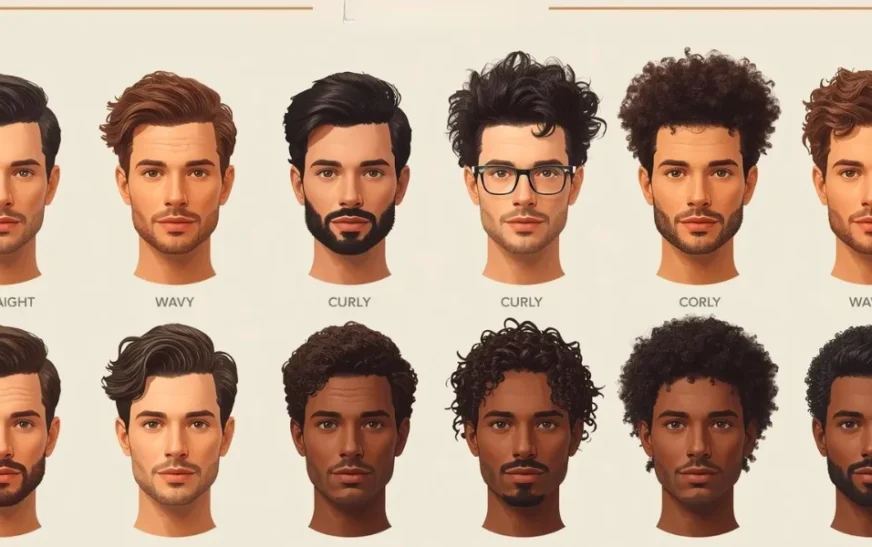
Men’s hair varies in texture, thickness, and curl pattern. Identifying your hair type is essential for selecting the right haircut, styling approach, and care routine. A hair type chart for men classifies hair into four primary categories: straight, wavy, curly, and coily, each with subtypes that define curl tightness and strand characteristics.
Recognizing your hair type helps prevent styling mishaps, frizz, and product misuse. It also guides you in choosing grooming tools, barbers, and hair products suited to your natural texture.
Men’s Hair Type Chart
A hair type chart for men classifies hair into straight, wavy, curly, and coily, helping you identify your natural texture and choose the right hairstyles, products, and care routines.
- Straight Hair
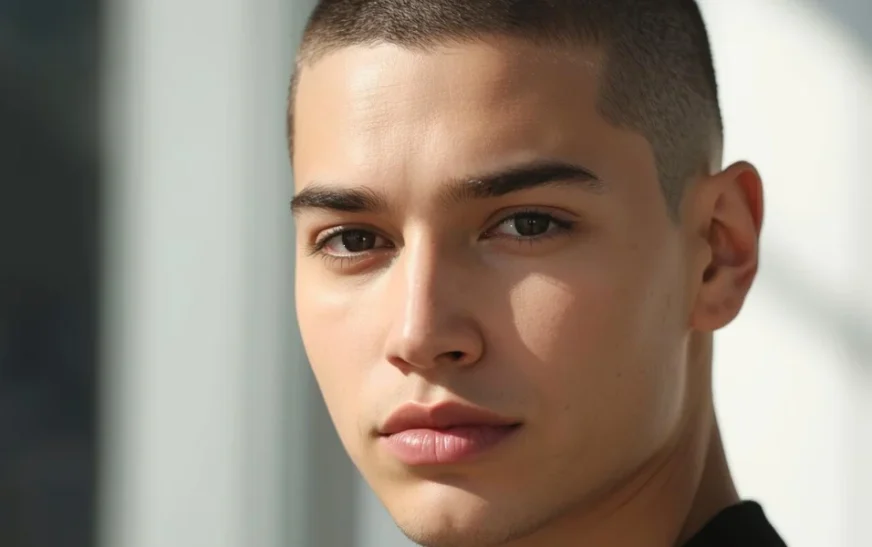
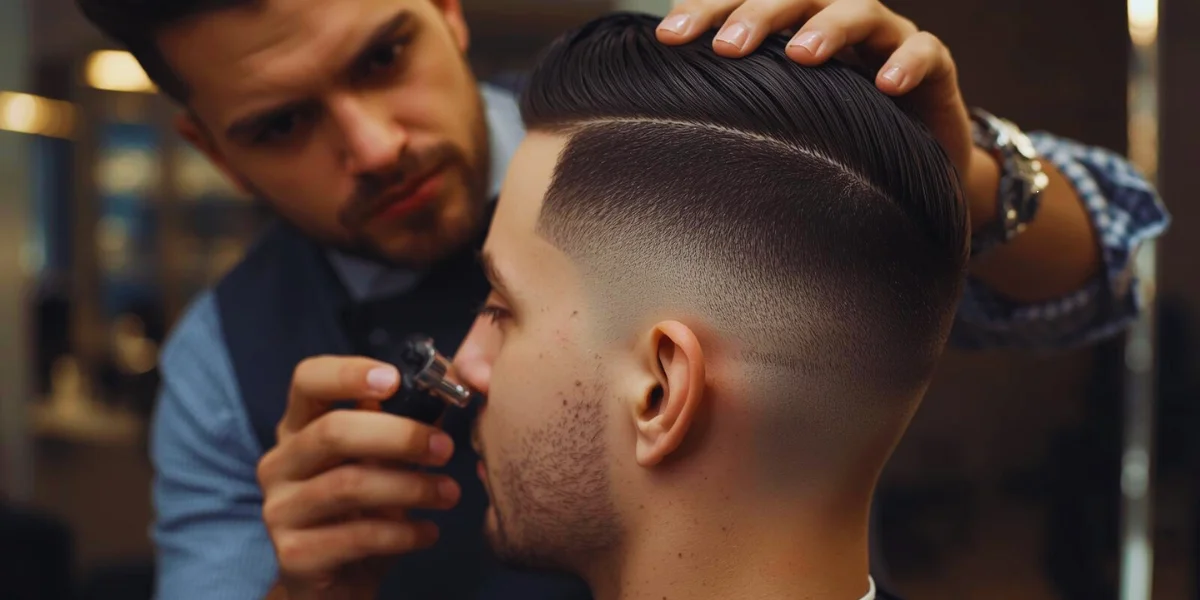
Straight hair lies flat from root to tip and reflects light naturally. Subtypes include 1A (very fine and thin, easy to style but prone to oiliness), 1B (medium thickness with some natural volume), and 1C (thick straight hair with more body).
Suitable hairstyles include slick backs, classic side parts, and textured crops. Lightweight styling products prevent flattening, and shampooing every 1–2 days maintains scalp health without weighing hair down.
- Wavy Hair
Wavy hair forms loose S-shaped patterns with natural volume. Subtypes range from 2A (gentle waves) to 2B (defined waves with slight frizz) and 2C (thicker waves with more visible curls).
Layered cuts, quiffs, or messy fringes complement this hair type. Light curl creams help define texture, while moisturizing shampoo and conditioner reduce frizz. Brushing when dry should be avoided.
- Curly Hair
Curly hair forms spirals or ringlets, requiring extra moisture. Subtypes include 3A (loose curls), 3B (springy medium curls), and 3C (tight corkscrew curls).
Recommended styles include curly fades, tapered afros, and layered curls. Sulfate-free shampoos, deep conditioning, and leave-in curl creams maintain hydration and curl definition while avoiding harsh chemicals and preserving hair integrity.
- Coily Hair
Coily hair forms tight coils or zig-zag patterns and is fragile and shrink-prone. Subtypes are 4A (soft coils), 4B (zig-zag strands with less definition), and 4C (tightest curls with high shrinkage). High top fades, twists, and protective styles work well for coily hair. Daily hydration with natural oils, gentle detangling, and low-manipulation hairstyles help preserve moisture and reduce breakage.
How to Identify Your Hair Type
To determine your hair type, wash your hair with a gentle shampoo, avoid styling products, and let it air-dry naturally. Observe the curl pattern and strand thickness.
Straight hair lies flat, wavy hair forms loose S-shapes, curly hair has spiral ringlets, and coily hair forms tight zig-zags. This identification ensures you select haircuts and products that work with your natural pattern, including styles like a low fade for Asian hair.
Tools and Products by Hair Type
| Hair Type | Recommended Tools & Styling Products |
| Straight | Comb, lightweight blow-dryer, pomade, lightweight gel |
| Wavy | Diffuser, wide-tooth comb, curl cream, light mousse |
| Curly | Diffuser, finger comb, leave-in conditioner, curl cream |
| Coily | Wide-tooth comb, soft brush, natural oils, hydrating cream |
Why Knowing Your Hair Type Matters
Understanding your hair type ensures better haircuts, improved hair health, and easier styling. It reduces hair breakage and allows men to select grooming tools, barbers, and products suited for their natural texture.
Using the wrong product or hairstyle can lead to frizz, damage, or excessive styling time. Correct identification saves effort and enhances hair confidence.
Common Hair Mistakes Men Make
Men often make mistakes like using heavy products on fine hair, over-washing, neglecting moisture for curly or coily hair, and choosing haircuts that clash with natural texture. Avoiding these pitfalls preserves hair health and maximizes style potential.
Recommended Hairstyles by Hair Type
For straight hair, side parts, slick backs, and textured crops work best. Wavy hair pairs with layered quiffs, medium lengths, and messy fringes. Curly hair benefits from curly fades, tapered afros, or layered curls. Coily hair looks great with high top fades, twists, or protective styles.
Each type also requires specific care routines, like moisturizing for curls or lightweight products for straight hair.
Global Hair Texture Variations
Hair texture varies by genetics and ethnicity. Men of European descent often have straight or wavy hair, Mediterranean regions tend to have thicker wavy hair, African descent predominantly features coily hair, and South Asian men usually have straight to wavy hair. Awareness of these patterns helps in choosing regionally popular styles and effective care routines.
FAQ’s
Q: What are the hair types for men?
Straight, wavy, curly, and coily, each with subtypes indicating curl tightness and strand thickness.
Q: How can I tell if my hair is wavy or curly?
Wavy hair forms loose S-shaped waves, while curly hair forms defined spiral ringlets.
Q: Can hair type change over time?
Yes. Hormonal changes, aging, and environmental factors can alter curl pattern and thickness.
Q: Which hair type needs the most moisture?
Coily hair requires the most hydration due to tight curls that limit natural oil distribution.
Q: What products are best for curly hair men?
Leave-in conditioners, curl creams, and moisturizing shampoos maintain curl definition.
Q: Why is my curly hair frizzy?
Curly hair is prone to dryness; lack of moisture or humidity increases frizz.
Q: How do I choose the right haircut for coily hair?
Consult a stylist experienced with tight curls and choose low-manipulation styles that preserve moisture.
Q: Can I style straight hair to look curly?
Yes, with curling tools and styling products, though it requires heat protection and consistent maintenance.
Conclusion
A hair type chart for men is essential for achieving the right hairstyle, maintaining healthy hair, and choosing appropriate products. By identifying your hair type, straight, wavy, curly, or coily, you can make informed decisions about haircuts, care routines, and styling methods, working with your natural texture to save time, prevent damage, and enhance confidence.