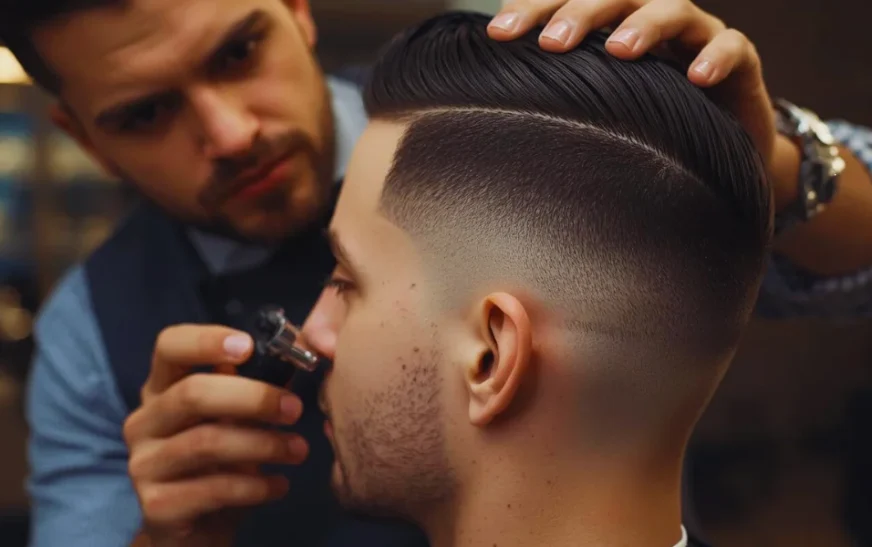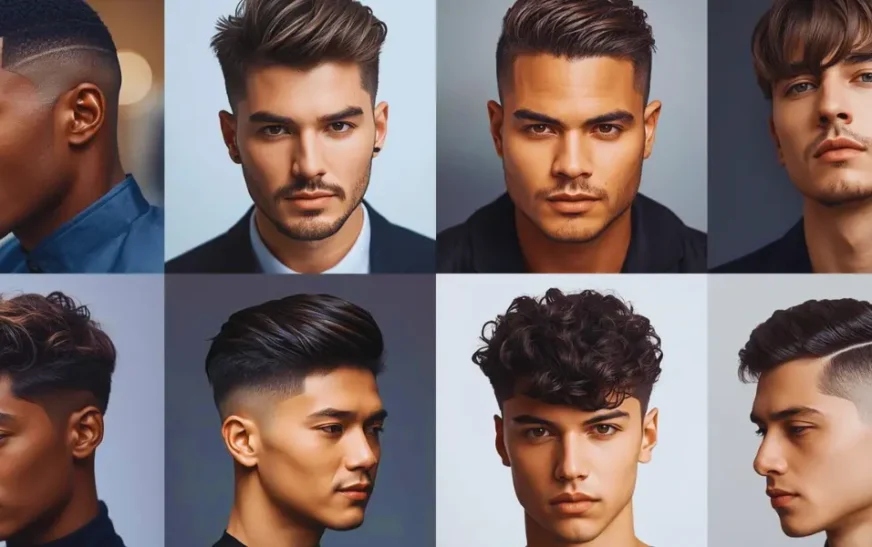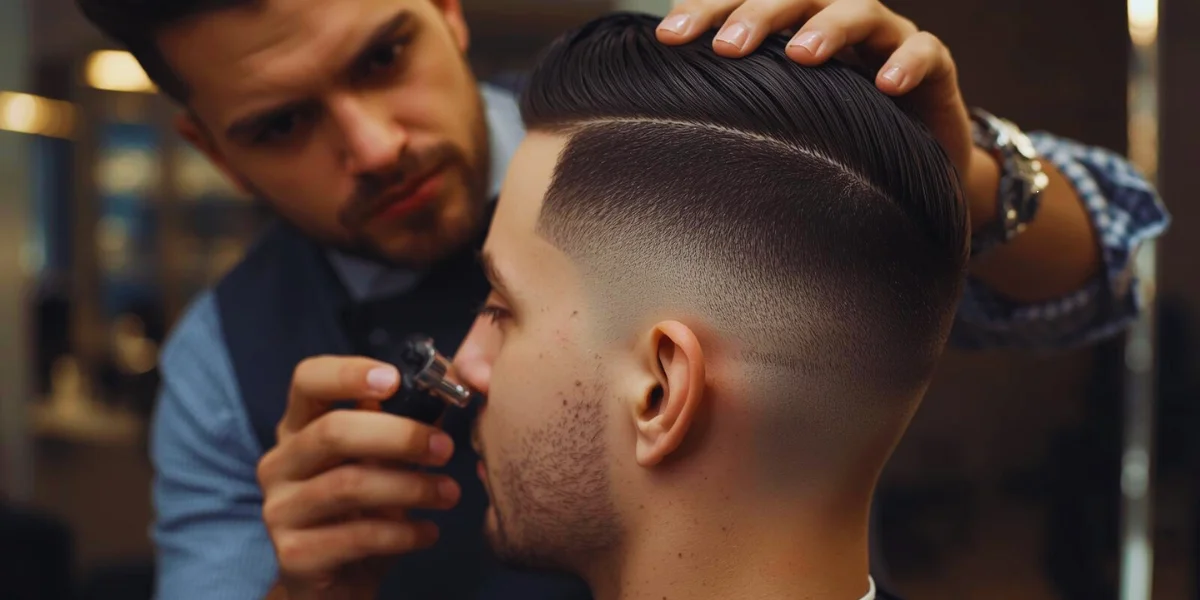

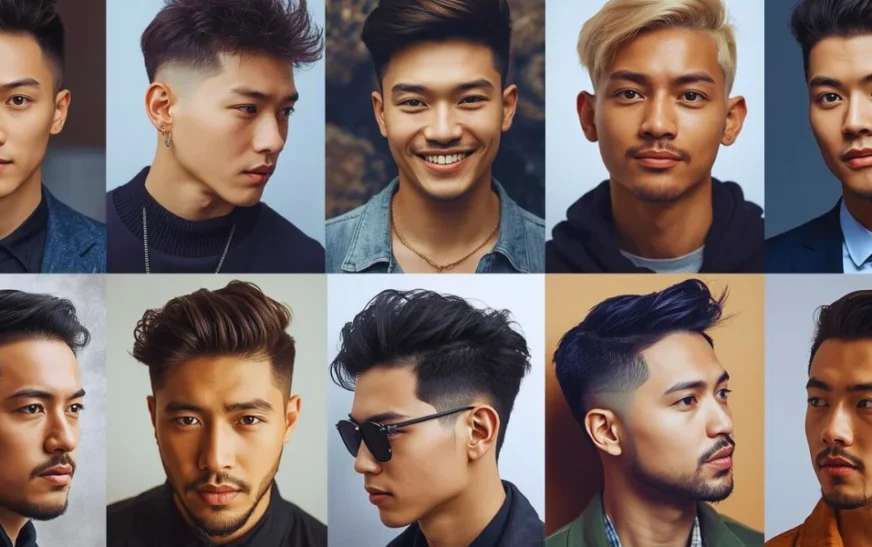
A low fade haircut for Asian hair starts just above the ear and gradually blends into longer hair on top. This fade haircut works especially well with thick, straight Asian hair, creating a smooth transition that suits modern styles like textured crops, pompadours, side parts, and Korean-inspired fringes.
Asian hair is typically dense and straight, which makes fade haircut techniques appear sharper and cleaner. Because of this, barbers often recommend the low fade as one of the most flattering and manageable hairstyles for Asian men.
Low Fade Haircut for Asian Hair
A low fade haircut for Asian hair starts just above the ear and gradually blends into longer hair on top, creating a clean and balanced look.
What Is a Low Fade Haircut?
A low fade is a barbering technique in which hair gradually becomes shorter from the top down, with the fade beginning low on the sides, near the ears and neckline. If you plan to ask for a low fade haircut at a barber shop, this style typically creates a clean and subtle transition between the top and the sides.
The haircut usually includes:
- A subtle taper near the ear
- Gradual blending using barber clippers and fade guards
- Longer hair left on top for styling
- A clean neckline and natural transition
Among all fade haircut types, the low fade is considered the most subtle and professional-looking option.
Why Low Fades Work Well for Asian Hair
Asian hair often has characteristics that make fade styles look especially polished. The strands are typically thicker and straighter, which helps barbers create crisp blending lines when cutting.
Because the hair grows densely, removing bulk from the sides instantly makes the haircut look cleaner and more structured.
A low fade offers several benefits for thick straight hair:
- Reduces heavy volume around the sides
- Makes styling easier and quicker
- Enhances face shape and jawline definition
- Works with many different top hairstyles
Barbers frequently note that straight hair allows for more precise fading, which is why low fades tend to look sharper on Asian hair types.
Best Low Fade Hairstyles for Asian Hair
The low fade is extremely versatile and pairs well with many modern Asian men’s hairstyles.
Textured Crop with Low Fade
The textured crop haircut is one of the most popular modern haircuts. The top is cut into short layers that create movement and texture, while the sides are faded.
This style works well for thick hair and round or oval face shapes. A small amount of styling clay helps create a natural matte finish.
Low Fade Pompadour
The pompadour haircut keeps the sides short while adding volume to the front. It creates a stylish, classic look that works well on both square and oval faces.
To style this haircut, blow-dry the hair upward with a round brush and apply a light pomade to hold the shape.
Side Part with Low Fade
A side part paired with a low fade creates a polished, professional appearance. This hairstyle is commonly chosen for office environments because it looks clean and structured.
The longer top allows the hair to be combed neatly to one side, while the tapered sides keep the overall look sharp.
Korean Low Fade with Fringe
Many Korean hairstyles feature a soft fringe across the forehead with subtle layering. When paired with a low fade, this style looks modern and youthful.
This haircut works particularly well with straight thick hair and is commonly seen in Korean fashion trends and K-pop styling.
Low Fade Undercut
The undercut version of the low fade creates a stronger contrast between the top and sides. The top remains longer while the faded sides appear very short.
This style suits people who want a bold, modern look, although it requires more frequent barber visits to maintain the contrast.
Choosing the Right Low Fade for Your Face Shape
Face shape plays an important role in choosing the best hairstyle. Different styles complement different facial structures.
For example, round faces usually look better with extra height at the top, such as a pompadour or a textured crop. The added volume visually lengthens the face.
Oval faces are naturally balanced and can work with almost any low fade style, including side parts or fringe styles.
Square faces often benefit from hairstyles that emphasise structure, such as pompadours or undercuts. Meanwhile, heart-shaped faces tend to look better with softer styles, such as layered fringe haircuts.
Understanding this relationship helps ensure the haircut complements your natural features.
How to Ask Your Barber for a Low Fade
Clear communication with your barber is the easiest way to avoid mistakes.
When asking for a low fade haircut, follow these simple steps:
- Ask for a low fade starting above the ear.
- Choose the clipper guard length for the shortest part of the fade.
- Tell the barber how long you want your hair on top.
- Mention whether you want texture, layers, or a fringe.
- Confirm how you want the neckline finished.
Showing a reference photo can also help prevent misunderstandings.
Styling Tools and Hair Products
Maintaining a low fade hairstyle becomes easier with the right tools and products.
Common styling tools include a blow dryer, a round brush, a barber comb, and, sometimes, texture powder for added volume.
For styling products, lightweight options work best for thick Asian hair. Hair clay is often the most popular choice because it provides a matte finish and flexible hold. Pomade is better for sleek styles like side parts or slick backs, while wax works well for adjustable hold throughout the day.
Low Fade vs Mid Fade vs Taper Fade
Different fade styles create different levels of contrast. The low fade starts just above the ear and produces the most subtle transition.
A mid fade begins around the middle of the head and offers a balanced look between subtle and dramatic. High fades start closer to the temples and create a bold appearance with very short sides.
A taper fade, on the other hand, only shortens the hair near the neckline and sideburns. It is the most conservative option and is often chosen for traditional haircuts.
Most people choose a low fade because it works in both casual and professional settings.
Maintenance and Barber Visit Schedule
Fade haircuts require regular upkeep to keep the blend looking fresh. Because the sides grow quickly, the fade begins to lose its sharpness after a few weeks.
Most barbers recommend:
- A fade touch-up every 2–3 weeks
- A full haircut every 4–6 weeks
Using styling products and keeping the neckline trimmed can help maintain the clean appearance between visits.
Common Mistakes to Avoid
Several mistakes can reduce the quality of a fade haircut.
Starting the fade too high is one of the most common problems, which can unintentionally turn a low fade into a mid fade. Over-thinning the top hair with thinning shears can also make thick Asian hair look flat.
Another mistake is using heavy gel products that weigh down the hair and rob it of its natural volume. Lighter styling products, such as clay or wax, usually work better.
Average Cost of a Fade Haircut
Haircut prices vary depending on the barber shop, city, and stylist experience.
| Region | Typical Price |
| United States | $25–$60 |
| United Kingdom | £20–£50 |
| Asia | $5–$40 |
Searching for terms like “Asian barber near me” or “Korean barber shop near me” can help you find stylists who specialise in Asian hair types.
FAQ’s
Q: Is a low fade good for Asian hair?
Yes. The straight, thick texture of Asian hair helps create clean blend lines, making low fades look especially sharp and well-defined.
Q: How long does a low fade haircut last?
Most low fades stay sharp for around two to three weeks before the sides begin to grow out.
Q: What guard is used for a low fade?
Barbers commonly use clipper guards between #0.5 and #2, depending on how tight the fade should be.
Q: Does a low fade suit round faces?
Yes. Pairing the fade with extra height on top, such as a pompadour or textured crop, helps elongate a round face.
Q: Can you get a low fade with long hair on top?
Absolutely. Many hairstyles, like slick backs, pompadours, and side parts, keep longer hair on top while fading the sides.
Q: What is the difference between a taper fade and a low fade?
A taper fade only shortens hair near the neckline and sideburns, while a low fade blends higher up along the sides.
Q: How do you style thick Asian hair with a fade?
Blow-drying the hair for volume and applying a small amount of styling clay or pomade helps maintain shape throughout the day.
Conclusion
The low fade haircut for Asian hair remains one of the most versatile and stylish choices for modern men. Its subtle taper keeps the sides clean while allowing different styles on top, from textured crops to pompadours and Korean-inspired fringe haircuts.
By choosing a style that matches your face shape, communicating clearly with your barber, and using the right styling products, a low fade can easily become a signature hairstyle that looks sharp in both casual and professional settings.