
Choosing the right foundation or makeup primer can completely change how your makeup looks and lasts. One of the most common decisions is choosing between silicone and water-based makeup.
These formulas differ in ingredients, skin compatibility, texture, and longevity. Understanding the difference helps prevent common issues such as foundation separation, makeup pilling, and patchy coverage.
Whether you’re selecting a daily foundation or a long-lasting product for an event, knowing which formula suits your skin type can make your makeup routine much easier.
Silicone vs. Water-Based Makeup
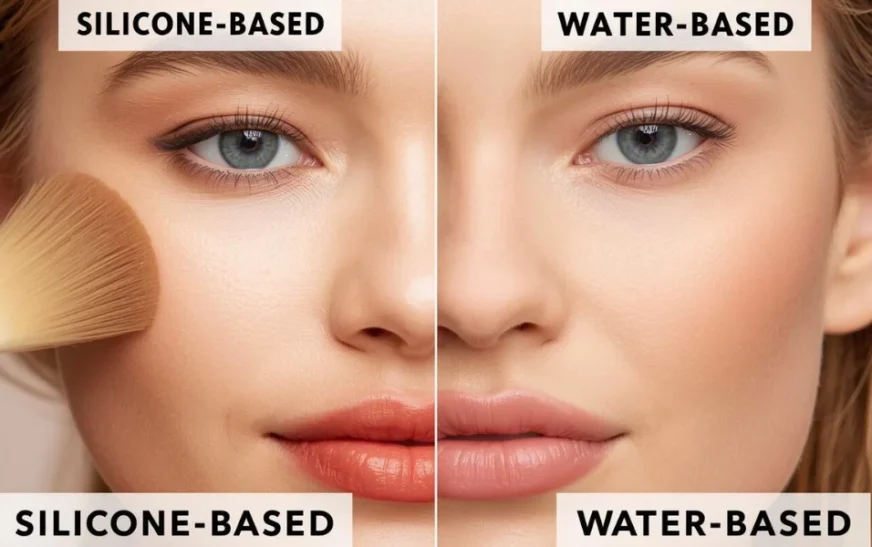
Silicone-based makeup creates a smooth, long-lasting finish by using silicones that blur pores and fine lines. Water-based makeup is lighter and more breathable, making it a better choice for a natural look and hydrated skin.
What Is Silicone-Based Makeup?
Silicone-based makeup contains ingredients called siloxanes, which create a smooth, silky finish on the skin. These ingredients help fill pores and fine lines, giving the foundation a flawless appearance.
Common silicone ingredients include:
- Dimethicone
- Cyclopentasiloxane
- Cyclohexasiloxane
These compounds sit lightly on the skin’s surface, forming a barrier that improves makeup longevity and blurs pores.
Key Characteristics
- Smooth, silky texture
- Excellent pore-blurring effect
- Long-lasting wear
- Resistant to sweat and humidity
Many long-wear foundations rely on silicone technology, including Estée Lauder Double Wear Foundation and Smashbox Photo Finish Primer.
These products are popular for events, photography, and long workdays.
What Is Water-Based Makeup?
Water-based makeup uses water as the main ingredient and usually contains fewer silicones. These formulas focus on hydration and natural-looking coverage.
Many ingredients list start with Aqua/Water/Eau, often paired with moisturising ingredients like Glycerin.
Key Characteristics
- Lightweight texture
- Breathable feel on skin
- Natural or dewy finish
- Easy blending
Products like MAC Face and Body Foundation from MAC Cosmetics and make up for ever water blend foundation are known for their skin-like finish.
Water-based formulas are often preferred for everyday makeup or minimal looks.
Silicone vs Water Based Makeup: Key Differences
| Feature | Silicone-Based Makeup | Water-Based Makeup |
| Main Ingredient | Silicones (siloxanes) | Water |
| Finish | Smooth and blurred | Natural and lightweight |
| Longevity | Long-lasting | Moderate wear |
| Skin Feel | Silky texture | Lightweight |
| Best For | Oily or textured skin | Dry or sensitive skin |
| Hydration | Moderate | Higher |
The main difference lies in texture and wear time. Silicone creates a smoother barrier, while water-based formulas focus on hydration and breathability.
How to Tell If Your Foundation Is Silicone or Water-Based
Ingredient labels can look confusing, but identifying the formula is actually simple.
Step-by-Step Guide
- Check the ingredient list.
- Look for silicones, such as dimethicone or siloxane compounds, near the top.
- If these appear in the first few ingredients, it’s likely silicone-based.
- If the formula begins with water and hydrating ingredients, it is typically water-based.
Another clue is the texture. Silicone products feel slippery or silky, while water-based formulas feel lighter and absorb quickly.
Which Makeup Base Is Best for Your Skin Type?
Different skin types respond better to different formulas, and the right choice can also improve makeup’s lasting on the face throughout the day.
Oily Skin
Silicone-based makeup often performs better because it helps control shine and improves makeup longevity.
Dry Skin
Water-based foundations provide hydration and a natural finish, making them more comfortable for dry skin.
Combination Skin
A mixed approach works well. For example:
- Silicone primer in oily areas
- Water-based foundation for hydration
Sensitive or Acne-Prone Skin
Some people prefer water-based formulas because they feel lighter and less occlusive.
Primer and Foundation Compatibility
One of the biggest reasons makeup fails is a mismatched formula.
If you apply a silicone primer with a water-based foundation, the layers may separate. It leads to patchy coverage or makeup pilling.
Best Practice
Match your formulas:
- Silicone primer + silicone foundation
- Water primer + water foundation
A popular silicone primer example is Smashbox Photo Finish Primer, while hydrating primers are commonly used with water-based foundations.
Pros and Cons of Each Formula
Silicone-Based Makeup
Advantages
- Blurs pores and texture
- Long-lasting wear
- Smooth finish for photography
Disadvantages
- Can feel heavier on the skin
- Requires proper cleansing
- May not suit extremely dry skin
Water-Based Makeup
Advantages
- Lightweight and breathable
- Hydrating for dry skin
- Natural-looking coverage
Disadvantages
- Shorter wear time
- Less pore-blurring effect
- May fade in humid climates
Common Makeup Problems and How to Fix Them
Foundation Separation
Usually caused by mixing incompatible formulas.
Solution: Match your primer and foundation base.
Makeup Pilling
It happens when products layer poorly or are applied too quickly.
Solution: Let each layer settle into the skin before applying the next product.
Makeup Sliding Off Oily Skin
Choose long-lasting silicone-based foundations designed for durability.
Patchy Coverage
Skin prep is essential. A balanced skincare routine with moisturiser helps the foundation blend evenly.
Hybrid and Alternative Makeup Options
Some modern foundations combine water and silicone ingredients to create balanced formulas.
Another option is mineral foundation, used by brands like BareMinerals. These powders provide breathable coverage and can work well for sensitive skin.
FAQ’s
Q: Is silicone-based makeup bad for skin?
Silicone ingredients used in cosmetics are considered safe for most people. They rest on the skin’s surface and help create a smooth, even finish. Proper cleansing at the end of the day helps prevent buildup.
Q: Does silicone clog pores?
Silicones like dimethicone are generally non-comedogenic. However, if makeup is not properly removed, trapped oil and debris may clog pores.
Q: Which makeup base lasts longer?
Silicone-based foundations usually last longer because they create a barrier that resists sweat and humidity.
Q: Is water-based makeup better for acne?
Many people with acne-prone skin prefer water-based formulas because they feel lighter and more breathable.
Q: Can you mix silicone and water-based makeup?
Mixing them can cause separation or pilling. Matching your primer and foundation base usually provides smoother results.
Q: Which makeup base is better for oily skin?
Silicone-based foundations typically work better for oily skin because they help control shine and improve wear time.
Q: How do I know if my primer is silicone-based?
Check the ingredient list. If dimethicone or other siloxane compounds appear near the top, the primer is likely silicone-based.
Conclusion
Understanding silicone vs. water-based makeup helps you choose products that work with your skin instead of against it.
Silicone-based formulas provide a smooth finish and long wear, making them ideal for oily or textured skin. Water-based makeup focuses on hydration and comfort, making it suitable for dry or sensitive skin.
The most important rule is simple: match your primer and foundation formulas. When the base ingredients work together, makeup applies more smoothly, lasts longer, and looks more natural throughout the day.